






Description
Moonrakers is a game of shipbuilding, temporary alliances, and shrewd negotiation set in a space-faring future. The players form a loose band of mercenaries, but while they are united in name, actual alliances are shaky as players are pitted against each other in the quest to become the new leader of the Moonrakers.
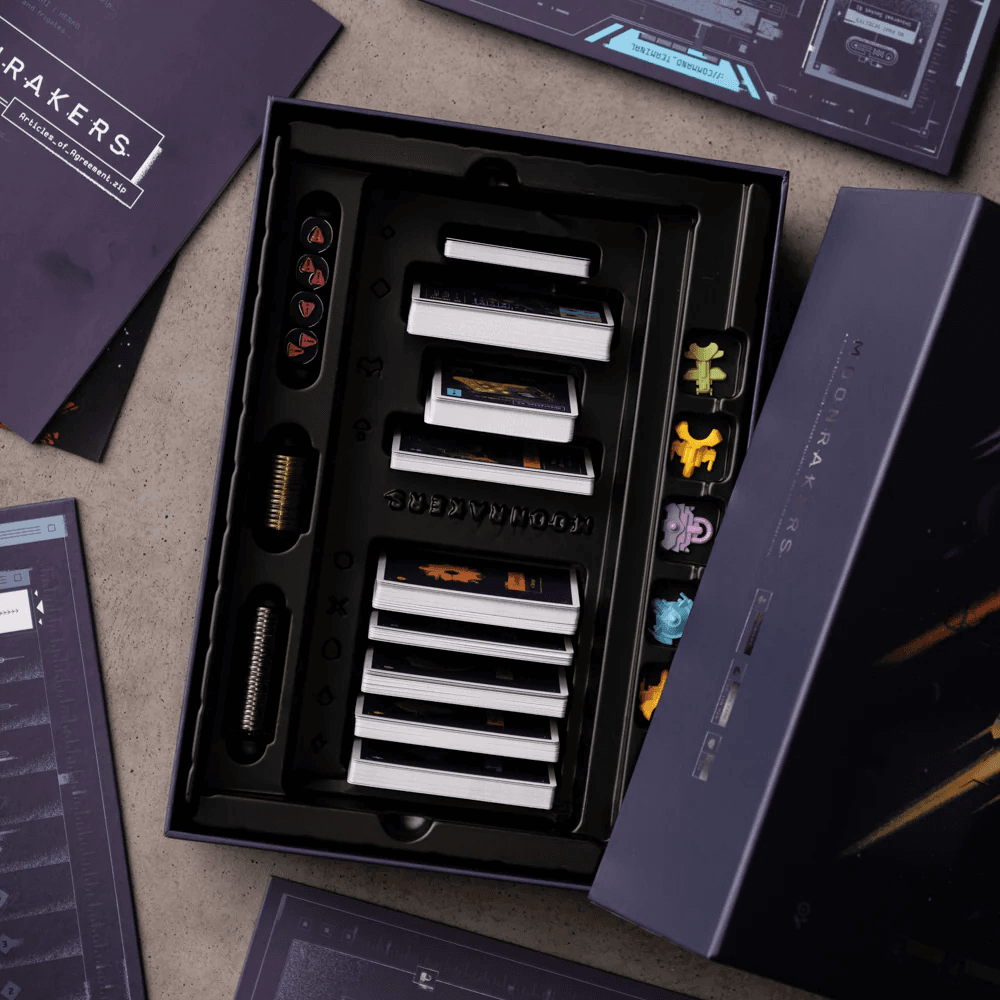
Moonrakers is a deck-building game in which players choose Contracts to attempt alone or with Allies in order to gain Prestige and Credits. After negotiating terms with Allies, players use their decks of Action cards to play Thrusters, Shields, Weapons, Reactors, and Crew to fulfill the requirements on each Contract. Each type of Action card has additional effects such as extra Actions, drawing additional cards, and protecting players from Hazards encountered while attempting Contracts.
Players create powerful decks and gain special abilities by upgrading their ships and hiring Crew Members. This helps them accomplish more difficult and rewarding contracts alone, letting them keep more Prestige and Credits for themselves.
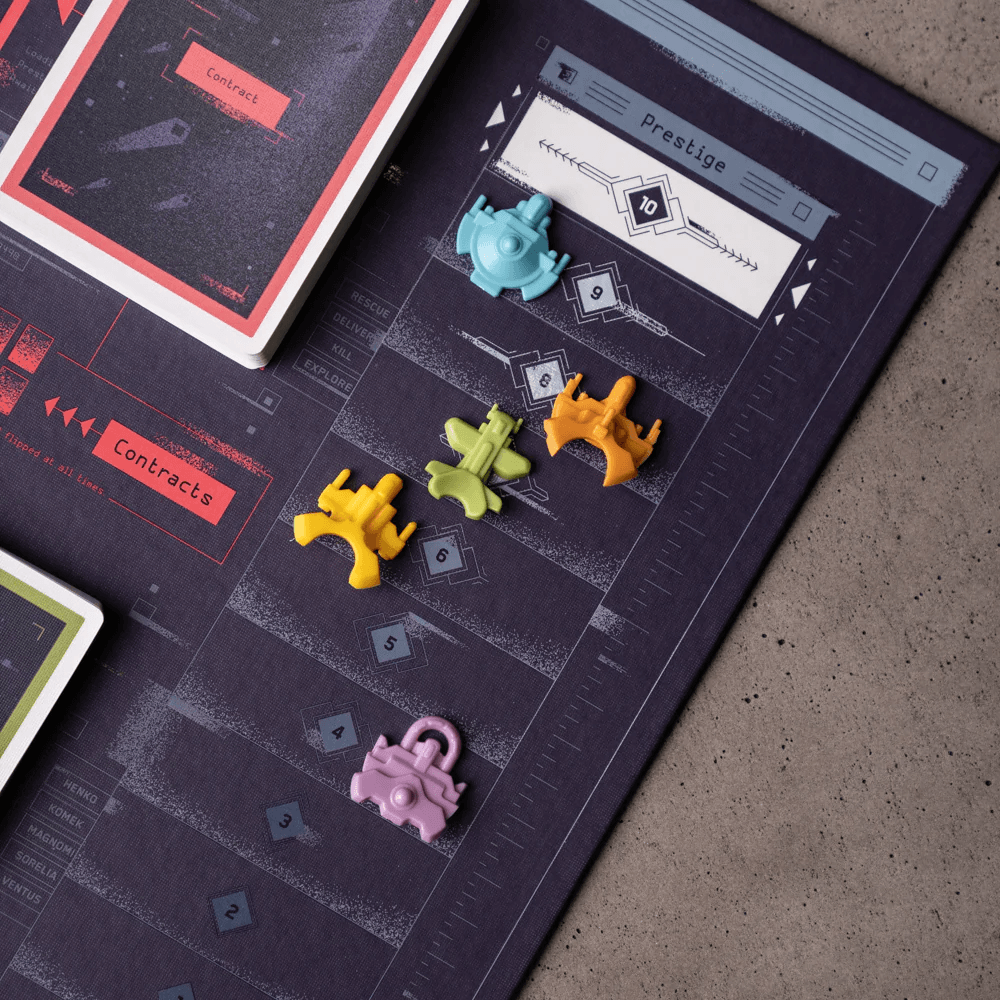
Allies negotiate who will receive the Prestige, Credits, and risk of Hazard from Contracts, but if you don’t make your offers enticing enough players may be tempted to betray you! The first player to 10 Prestige wins, but be careful as hazards encountered on Contracts reduce your Prestige!
-description from designer




samandandy –
Moonrakers is one of those games that is fairly simple to learn while still being a complex and interesting game. We have played deck-builders before and so thought we were well set on how to recycle cards, but the strategy of what cards to keep and how to balance your deck is very different from other deck-builders we have played, which kept the game interesting for us. I think this game would be pretty accessible to hardcore gamers as well as those just a step past entry-level.
The basic premise of the game is that you have a ship in space that you are using to fulfill various contracts. You fulfill the contracts by using your ships abilities (the deck which gets shuffled) – reactors, thrusters, shield, damage, and the crew that you pick up over time. You can also use the credits you get from contracts to improve your ship, which gets you more or better cards as well as some permanent abilities.
The trick is that the contracts are very difficult (and sometimes impossible) to fulfill by yourself. You have very limited ability to play the cards that are necessary to fulfill the contract and so you have to partner up with other players, trading the benefits of the contract for their aid. So for example, if I want to fulfill a contract that needs 3 yellow (thrusters) and 2 blue (reactors) and pays 2 prestige (end game points), 5 credits (money), and costs 2 damage die, but I only have the ability to play 1 blue and 1 yellow, I then ask the other players who is willing to ally with me. I may use only one person or we may need two, but we’ll agree to split the awards in various ways. Maybe player 2 offers to provide all the necessary items for 1 prestige and 2 credits, but I have to take all the damage die and player 3 can guarantee 1 blue and 1 yellow, but has to gamble as to whether they’ll draw another, so they’ll take 1 of the damage die and ask for 4 credits and no prestige. I can then choose who to work with or even if I want to try and make a deal where all three of us work together.
As you may guess from this, the length of the game comes in the negotiation. The first couple of rounds were also a little long for us as we learned the rhythm of the game. But the play is remarkably simple once you get going and I think most people would get the flow after a couple of practice rounds. One of our players typically hates negotiation based games because people will gang up on others or throw the game to let someone else win, and I could see that being a potential issue, but for this particular game, that seemed less likely to happen based on the strong need for other people to get anything done. The length of the gameplay is much more likely to vary, though, based on how into the negotiations your players can get.
The two negatives for this game are that keeping track of your actions is somewhat difficult (you start with 1, but then can add them and use them within a turn) and that the writing on the cards is pretty small. I think that you could mitigate the first with some sort of six-sided die or counters of some sort, but we didn’t think of that until much later in the game. The second issue is mitigated by being willing to let everyone pick up cards to review at leisure and/or reading out the details of a card for the group when they’re flipped.
Overall, great game concept, flow, and accessibility. Fun for a group as it’s very interactive and not just everyone working on their own board separately. Competitive yet encouraging teamwork. I would highly recommend to most game groups and families, unless you know you have THAT person that makes negotiation-based games less than fun.